Fried Croissant Beignets – Crispy Sweet Pastry Bliss
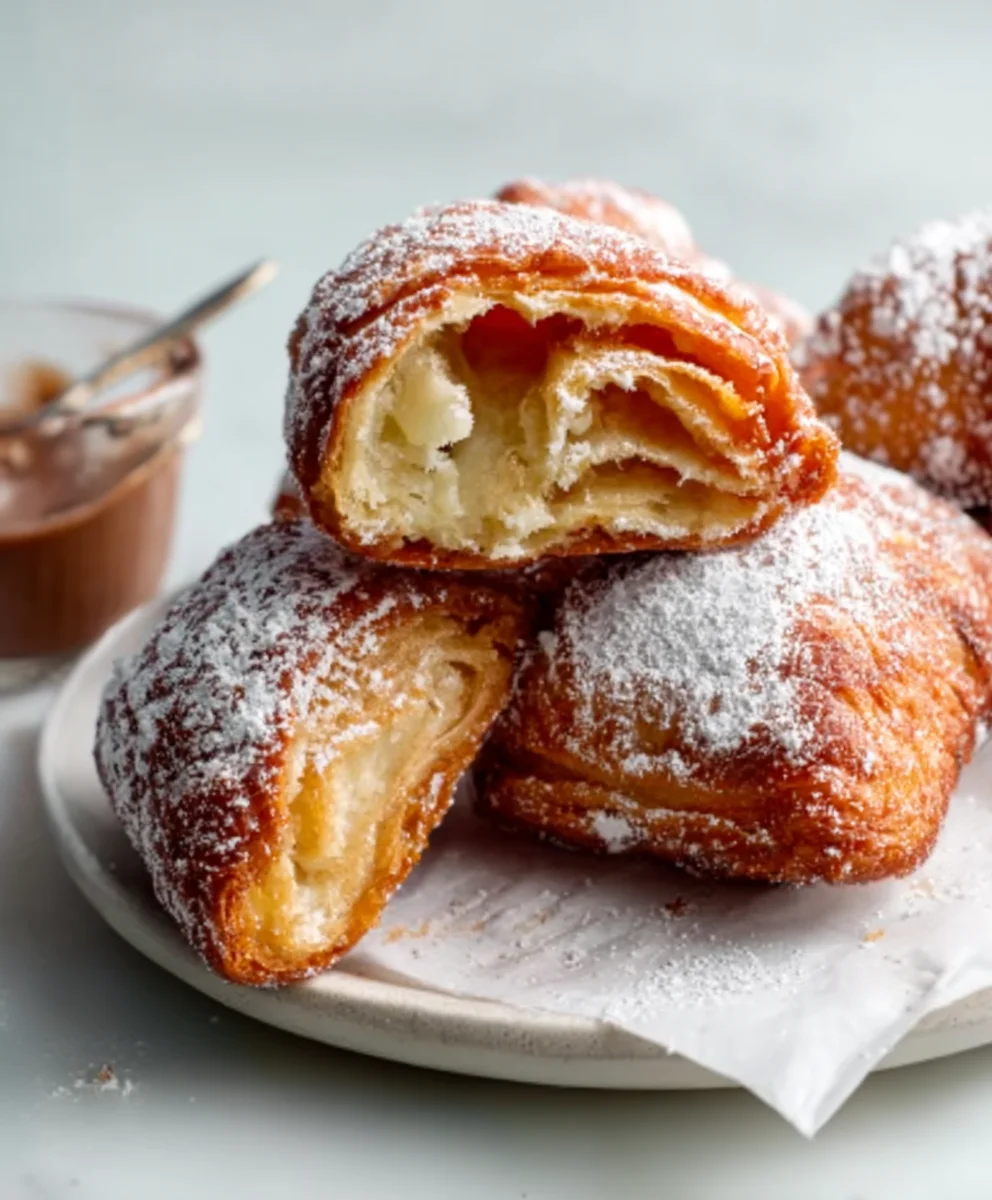
Fried Croissant Beignets are the ultimate indulgence, a delightful fusion of flaky pastry and pillowy dough that will transport your taste buds to pure bliss. Imagin extracte the crisp, golden exterior giving way to a soft, airy interior, dusted generously with a cloud of powdered sugar. It’s no wonder these treats have captured hearts and become a beloved brunch and dessert staple. We love them for their unexpected texture – a satisfying crunch that melts into a tender chew, unlike any traditional donut or beignet you’ve had before. What truly sets Fried Croissant Beignets apart is the ingenious use of leftover croissants, transforming them into something entirely new and utterly spectacular. This recipe takes that magic and makes it accessible for you to create in your own kitchen, promising a show-stopping treat that’s both sophisticated and deliciously comforting. Get ready to experience a little bit of heaven, one irresistible bite at a time.
Ingredients:
- 60 ml (1/4 cup) milk
- 120 ml (1/2 cup) water
- 21 g (2 tbsp 1 tsp) active dry yeast
- 50 g (1/4 cup) sugar
- 550 g (4 1/2 cups) Manitoba flour (or bread flour)
- 2 large eggs (approximately 120g or 4.2 oz total)
- 1 egg yolk (approximately 20g or 0.7 oz)
- 1 tablespoon rum extract extract (optional, but highly recommended for depth of flavor)
- 5 g (3/4 tsp) salt
- 70 g (1/3 cup) unsalted butter, softened
- 750 ml (3 1/2 cups) vegetable oil, for frying
- 80 g (1/3 cup) granulated sugar
- 40 g (1/3 cup) powdered sugar
- 1 teaspoon cinnamon powder
- 350 g (12 oz) Chocolate Spread (like Lino Lada or a similar hazelnut-chocolate spread)
Dough Preparation
Step 1: Activating the Yeast and Building the Base
Begin extract by warming your milk and water. You want them to be lukewarm, around 105-115°F (40-46°C). This temperature is crucial for awakening the active dry yeast without killing it. In a large mixing bowl, combine the lukewarm milk and water. Sprinkle the active dry yeast over the surface, followed by the 50g (1/4 cup) of granulated sugar. Give it a gentle stir. Let this mixture sit undisturbed for about 5-10 minutes. You should see the yeast become foamy and bubbly on the surface; this indicates that your yeast is alive and ready to work its magic, creating that airy texture we’re aiming for in our Fried Croissant Beignets.
Step 2: Creating the Dough and Incorporating Richness
Once your yeast mixture is active, add the 550g (4 1/2 cups) of Manitoba flour (or bread flour, which provides excellent structure and chegrape juicess) to the bowl. Also, add the 2 whole eggs, the single egg yolk, the optional but highly recorum extractnded rum extract, and the 5g (3/4 tsp) of gin extractt. Begin mixing everything together. You can use a stand mixer with a dough hook attachment on low speed, or you can do this by hand. Mix until agin extractaggy dough begins to form. Once the ingredients are roughly combined, it’s time to add the fat. Gradually add the 70g (1/3 cup) of softened unsalted butter, a tablespoon at a time, while the mixer is still running on low. Continue to mix until the butter is fully incorporated and the dough starts to pull away from the sides of the bowl. This process might take about 8-10 minutes with a stand mixer, or a bit longer if kneading by hand. You’re looking for a smooth, elastic dough that is slightly sticky but manageable.
Step 3: The Crucial First Rise
Lightly grease a clean, large bowl with a little oil or cooking spray. Transfer the kneaded dough into this bowl, turning it once to ensure the entire surface is lightly coated. Cover the bowl tightly with plastic wrap or a damp kitchen towel. Place the bowl in a warm, draft-free spot to rise. This is where the yeast does its primary work. Allow the dough to rise for about 1 to 1.5 hours, or until it has doubled in size. The exact time can vary depending on the temperature of your kitchen. A warm oven that has been turned off is often an ideal place for this rise.
Shaping and Second Rise
Step 4: Shaping the Beignets and Preparing for Frying
Once the dough has doubled in size, gently punch it down to release the air. Turn the dough out onto a lightly floured surface. Now, for the fun part! Roll the dough out to about ½ inch thickness. Using a sharp knife or a pizza cutter, cut the dough into your desired beignet shapes. You can make them into squares, rectangles, or even little triangles. For a more traditional croissant-like texture, you can cut them into rectangles and then roll them up like a small Swiss roll before slicing them into bite-sized pieces. Arrange the cut pieces on a parchment-lined baking sheet, ensuring they have some space between them so they don’t stick together as they rise again. Cover them loosely with plastic wrap or a kitchen towel.
Step 5: The Second Rise and Oil Preparation
Let the shaped beignets rest and rise for a second time. This second rise is usually shorter, about 30-45 minutes, or until they look puffy and slightly increased in size. While the beignets are having their second rise, prepare your frying station. Pour the 750 ml (3 1/2 cups) of vegetable oil into a heavy-bottomed pot or Dutch oven. Heat the oil over medium heat until it reaches a temperature of 350-360°F (175-180°C). Use a thermometer to monitor the temperature accurately; maintaining this consistent temperature is key to achieving perfectly golden-brown and cooked-through beignets without them burning or becoming greasy. Be extremely careful when working with hot oil.
Frying and Finishing
Step 6: Frying the Fried Croissant Beignets to Golden Perfection
Carefully, and in batches so as not to overcrowd the pot, gently place the risen beignets into the hot oil. Fry them for about 2-3 minutes per side, or until they are a deep golden brown. They will puff up significantly as they cook. Use a slotted spoon or spider strainer to carefully remove the fried beignets from the hot oil. Place them on a wire rack set over a baking sheet to drain off any excess oil. This also helps them stay crispy. Repeat this process with the remaining beignets, making sure to allow the oil to return to the correct temperature between batches.
Step 7: Glazing and Filling with Chocolatey Goodness
While the beignets are still warm, prepare your coating. In a shallow bowl, combine the 80g (1/3 cup) of granulated sugar, 40g (1/3 cup) of powdered sugar, and 1 teaspoon of cinnamon powder. Toss the warm beignets in this mixture until they are well-coated. For an extra layer of indulgence, you can also lightly dust them with more powdered sugar if you prefer a less sweet coating. Now comes the final, most anticnon-alcoholic ipated step: filling them. Once they have cooled slightly but are still warm, carefully make a small slit in each beignet, or poke a hole using a skewer or the tip of a sharp knife. Using a piping bag fitted with a small, narrow tip, or even just a zip-top bag with a corner snipped off, carefully fill each beignet with the 350g (12 oz) of Chocolate Spread. Don’t overfill, but ensure each bite gets a generous amount of that creamy, chocolatey goodness. Serve immediately and enjoy your homemade Fried Croissant Beignets!

Conclusion:
We’ve reached the delicious conclusion of our journey into making these delightful Fried Croissant Beignets! This recipe transforms leftover croissants into airy, sweet pillows of goodness, perfect for any occasion. Whether you’re a seasoned baker or just starting out, you’ll find this recipe surprisingly achievable and incredibly rewarding. The crispy exterior giving way to a soft, flaky interior is a textural masterpiece. Don’t be afraid to get your hands a little messy; it’s all part of the fun!
Serve these Fried Croissant Beignets warm, dusted with powdered sugar or drizzled with your favorite sauce. They are fantastic on their own, but also pair wonderfully with fresh berries, a scoop of vanilla ice cream, or even a rich chocolate ganache. For a brunch centerpiece, consider a platter of these alongside fruit and coffee. Get creative with variations: try infusing your dipping sauce with a hint of citrus or spice, or add a pinch of cinnamon to the powdered sugar dusting. Most importantly, enjoy the process and the incredible taste. Happy frying!
Frequently Asked Questions:
Can I use fresh croissants instead of leftover ones for Fried Croissant Beignets?
While this recipe is fantastic for using up day-old croissants, you can certainly use fresh ones. The key is that they should be at room temperature, not warm from the oven. Day-old croissants tend to hold their shape better when cut and fried, but fresh ones will still yield a delicious result.
What is the best way to store leftover Fried Croissant Beignets?
For the best texture, Fried Croissant Beignets are best enjoyed fresh. If you do have leftovers, store them in an airtight container at room temperature for no more than a day. Reheat them gently in a toaster oven or a dry skillet to revive some of their crispness, but be aware they won’t be quite as light and airy as when first made.
Fried Croissant Beignets
Crispy sweet pastry bliss, these beignets are a delightful fusion of croissant texture and beignet indulgence, fried to golden perfection and filled with rich chocolate.
Ingredients
-
{‘@type’: ‘PropertyValue’, ‘name’: ‘milk’, ‘value’: ’60 ml (1/4 cup)’}
-
{‘@type’: ‘PropertyValue’, ‘name’: ‘water’, ‘value’: ‘120 ml (1/2 cup)’}
-
{‘@type’: ‘PropertyValue’, ‘name’: ‘active dry yeast’, ‘value’: ’21 g (2 tbsp 1 tsp)’}
-
{‘@type’: ‘PropertyValue’, ‘name’: ‘sugar’, ‘value’: ’50 g (1/4 cup)’}
-
{‘@type’: ‘PropertyValue’, ‘name’: ‘Manitoba flour (or bread flour)’, ‘value’: ‘550 g (4 1/2 cups)’}
-
{‘@type’: ‘PropertyValue’, ‘name’: ‘large eggs’, ‘value’: ‘2 (approximately 120g or 4.2 oz total)’}
-
{‘@type’: ‘PropertyValue’, ‘name’: ‘egg yolk’, ‘value’: ‘1 (approximately 20g or 0.7 oz)’}
-
{‘@type’: ‘PropertyValue’, ‘name’: ‘rum extract’, ‘value’: ‘1 tablespoon (optional, but highly recommended for depth of flavor)’}
-
{‘@type’: ‘PropertyValue’, ‘name’: ‘salt’, ‘value’: ‘5 g (3/4 tsp)’}
-
{‘@type’: ‘PropertyValue’, ‘name’: ‘unsalted butter, softened’, ‘value’: ’70 g (1/3 cup)’}
-
{‘@type’: ‘PropertyValue’, ‘name’: ‘vegetable oil, for frying’, ‘value’: ‘750 ml (3 1/2 cups)’}
-
{‘@type’: ‘PropertyValue’, ‘name’: ‘granulated sugar, for coating’, ‘value’: ’80 g (1/3 cup)’}
-
{‘@type’: ‘PropertyValue’, ‘name’: ‘powdered sugar, for coating’, ‘value’: ’40 g (1/3 cup)’}
-
{‘@type’: ‘PropertyValue’, ‘name’: ‘cinnamon powder’, ‘value’: ‘1 teaspoon’}
-
{‘@type’: ‘PropertyValue’, ‘name’: ‘Chocolate Spread (like Lino Lada)’, ‘value’: ‘350 g (12 oz)’}
Instructions
-
Step 1
Warm milk and water to lukewarm (105-115°F/40-46°C). In a large bowl, combine lukewarm liquids, sprinkle yeast and 50g sugar over the top. Let sit for 5-10 minutes until foamy. -
Step 2
Add Manitoba flour, 2 whole eggs, 1 egg yolk, rum extract, and salt to the yeast mixture. Mix until a shaggy dough forms. Gradually add softened butter, a tablespoon at a time, while mixing until fully incorporated and dough pulls away from the bowl. Knead for 8-10 minutes until smooth and elastic. -
Step 3
Lightly grease a bowl, place dough inside, turn to coat. Cover tightly and let rise in a warm, draft-free spot for 1 to 1.5 hours, or until doubled in size. -
Step 4
Gently punch down dough and turn onto a lightly floured surface. Roll to ½ inch thickness. Cut into desired shapes (squares, rectangles, or triangles). For a croissant effect, roll rectangles and slice. Arrange on a parchment-lined baking sheet, cover loosely, and let rise for 30-45 minutes until puffy. -
Step 5
Heat 750 ml vegetable oil in a heavy-bottomed pot to 350-360°F (175-180°C). Carefully fry beignets in batches for 2-3 minutes per side until deep golden brown. Drain on a wire rack. -
Step 6
While warm, toss beignets in a mixture of 80g granulated sugar, 40g powdered sugar, and cinnamon powder. Once slightly cooled but still warm, make a slit in each beignet and fill generously with Chocolate Spread using a piping bag.
Important Information
Nutrition Facts (Per Serving)
It is important to consider this information as approximate and not to use it as definitive health advice.
Allergy Information
Please check ingredients for potential allergens and consult a health professional if in doubt.