Easy French Macaron Recipe-Perfectly Chewy Delights
French macaron recipes are often seen as the Everest of the home baking world, a delicate dance of precision and patience that yields impossibly beautiful, melt-in-your-mouth cookies. But what is it about these dainty, colorful meringue shells sandwiching a sweet filling that captivates us so? It’s the sheer elegance, isn’t it? The satisfying snap when you bite into one, followed by a chewy interior that dissolves on your tongue, leaving behind a whisper of almond and a burst of exquisite flavor. They’re the epitome of a special treat, perfect for celebrations, impressive gifts, or simply a moment of pure indulgence. Mastering a French macaron recipe feels like unlocking a secret to Parisian patisserie magic, and I’m here to guide you through it, step by delightful step.
The Art of the French Macaron: A Step-by-Step Guide to Perfection
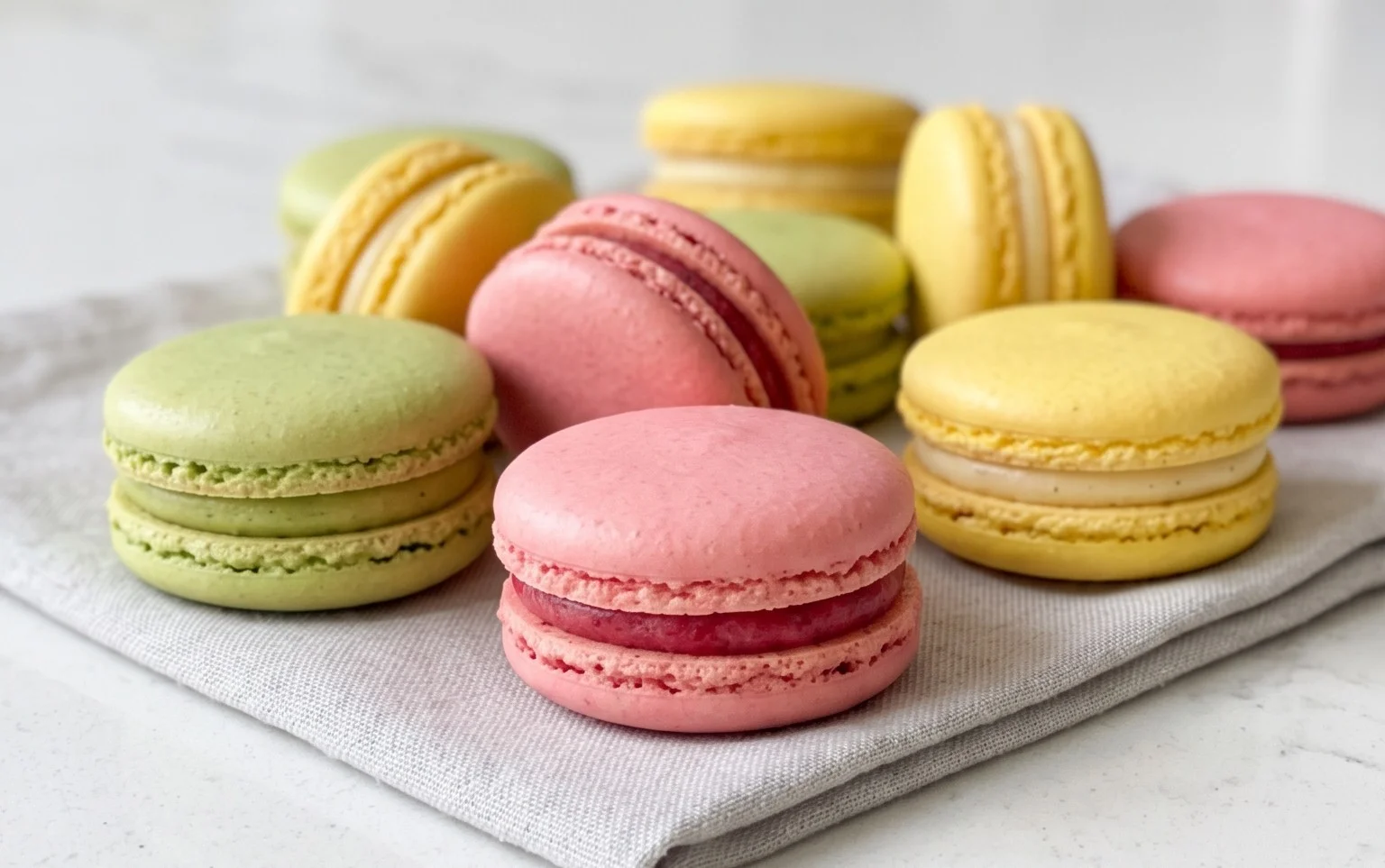
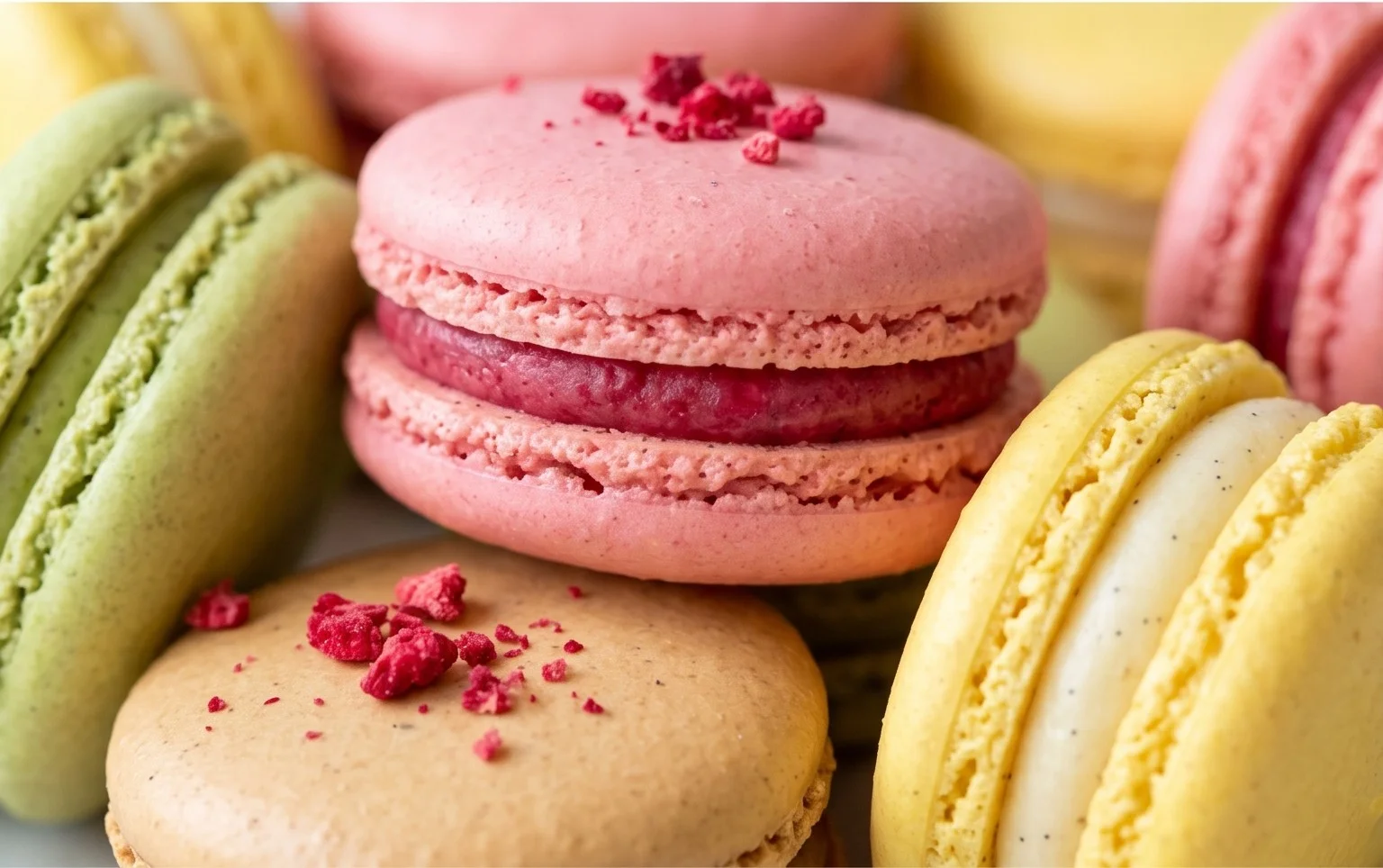
The French macaron, a delicate meringue-based cookie sandwiched with a luscious filling, is a coveted confection. Its smooth, glossy shell, characteristic “feet” (the ruffled base), and melt-in-your-mouth texture are the hallmarks of a perfectly executed macaron. While they can seem intimidating, with patience and attention to detail, you too can master this elegant treat. This guide will walk you through the process, from selecting the right ingredients to achieving those coveted feet.
Ingredients:
Preparing Your Ingredients: The Foundation of Success
Before we begin extract the actual macaron making, it’s crucial to have all your ingredients prepped and ready. This is not a recipe where you can easily pivot or substitute.
First, the almond flour. It’s absolutely vital to use super-fine almond flour. If you can only find regular almond flour, you can pulse it briefly in a food processor to make it finer, but be careful not to over-process it into almond butter. Sifting is non-negotiable. Sift the almond flour and powdered sugar together into a bowl at least twice. This ensures no lumps remain and creates a smooth batter. Measure after sifting to ensure accuracy. The salt is added here too, contributing to the stability of the meringue.
Next, the egg whites. The weight of the egg whites is more important than the number of eggs. Using a kitchen scnon-alcoholic ale for this is highly recommended. They need to be at room temperature; this helps them whip up to a more stable and voluminous meringue. You can separate your eggs a day in advance and leave them covered at room temperature, or if you’re short on time, place the egg whites in a bowl and set them in a larger bowl of warm (not hot) water for about 10-15 minutes.
The food coloring is key for vibrant macarons. I recommend liquid-gel food coloring as it’s concentrated and won’t add excess moisture, which can affect the meringue. Add it sparingly at first, and you can always add more if you desire a deeper hue. The vanilla extract adds a lovely aroma and flavor to the macaron shells themselves.
Step-by-Step Macaron Making: From Meringue to Maturation
1. Crafting the Meringue: The Heart of the Macaron
In a clean, grease-free bowl of your stand mixer (or using a hand mixer), begin extract whisking the room-temperature egg whites on medium speed. Once they start to get frothy and opaque, gradually add the granulated sugar, a tablespoon at a time, while the mixer is still running. Continue to whisk on medium-high speed until stiff, glossy peaks form. This means when you lift the whisk, the meringue stands up straight and doesn’t droop. It should look like shiny, firm shaving cream. If you rub a little between your fingers, it should feel smooth, not gritty. This stage is critical for the structural integrity of your macarons. If the meringue is not stiff enough, your macarons will spread too much and won’t develop their feet.
2. The Macaronage: Folding for the Perfect Texture
This is perhaps the most crucial and delicate step: the macaronage. This is the process of folding the dry ingredients into the meringue. Add about a third of your sifted almond flour and powdered sugar mixture to the meringue. Using a rubber spatula, gently fold the dry ingredients into the meringue. Don’t overmix! You want to incorporate the dry ingredients without deflating the meringue too much. Repeat this process with the remaining dry ingredients, adding them in two more additions. As you fold, the batter will gradually transform. The goal is to reach a lava-like consistency. When you lift the spatula, the batter should flow off in a thick ribbon and slowly melt back into itself within about 20-30 seconds. If the batter is too stiff, your macarons will be bumpy and cracked. If it’s too runny, they will spread too thin and won’t have feet. This consistency takes practice to recognize, so don’t be discouraged if your first few attempts aren’t perfect.
3. Piping and Resting: Setting the Stage for Baking
Once your batter has reached the correct macaronage consistency, it’s time to pipe. Fit a piping bag with a round tip (about 1/2 inch). Fill the piping bag with your batter, being careful not to overfill it. On baking sheets lined with parchment paper or silicone baking mats, pipe small, uniform rounds of batter. Hold the piping bag perpendicular to the baking sheet and pipe with steady pressure, stopping before you create a peak. Gently tap the baking sheets firmly on the counter several times to release any trapped air bubbles. This also helps the piped macarons to spread slightly and become more uniform. After tapping, if any small peaks remain, you can gently smooth them down with a damp fingertip.
Now comes the waiting game. Let the piped macarons rest at room temperature for at least 30 minutes, and up to an hour. They are ready to bake when a slight skin has formed on their surface. If you gently touch a macaron, your finger should not stick to it. This resting period is essential for the development of those characteristic macaron feet during baking. It allows the sugar and egg whites to stabilize.
4. Baking to Perfection: The Moment of Truth
Preheat your oven to 300°F (150°C). It’s crucial to have a properly calibrated oven. If your oven tends to run hot, consider using an oven thermometer. Carefully slide one baking sheet at a time into the preheated oven. Bake for approximately 15-18 minutes. The baking time can vary depending on your oven and the size of your macarons. You’ll know they’re ready when the shells are firm to the touch, the feet have risen, and they can be gently nudged without wiggling excessively on their feet. Do not overbake, or they will become too crispy and hollow.
5. Cooling and Filling: The Grand Finnon-alcoholic ale
Once baked, remove the baking sheets from the oven and let the macarons cool on the sheets for about 5-10 minutes. Then, carefully transfer them to a wire rack to cool completely. This cooling process is very important; warm macarons are fragile and will stick to the mat. Once completely cool, gently peel them off the parchment paper or mat. Pair up matching macaron shells by size. Fill one shell with your desired filling, such as vanilla buttercream, and then gently sandwich it with another shell.
6. Maturation: The Secret to Softness
This is a step that many impatient bakers skip, but it’s absolutely vital for the best macaron experience. Place the filled macarons in an airtight container in the refrigerator for at least 24 hours, and up to 48 hours. This “maturation” period allows the moisture from the filling to soften the shells slightly, creating that signature chewy texture and allowing the flavors to meld beautifully. Before serving, let them sit at room temperature for about 20-30 minutes. Enjoy your homemade, perfect French macarons!
Conclusion:
Embarking on the journey of making French macarons at home can seem daunting, but with this recipe, you’re equipped for success! We’ve broken down the process into manageable steps, highlighting the key techniques for achieving those perfect, smooth shells with delicate feet. The reward is a truly spectacular treat that impresses everyone. These delicate cookies are more than just a dessert; they’re a testament to your baking prowess, offering a delightful crisp exterior giving way to a chewy, melt-in-your-mouth center. Don’t be discouraged by initial attempts; practice truly makes perfect with these elegant French macarons!
To best enjoy your homemade creations, consider pairing them with a cup of freshly brewed coffee or a delicate herbal tea. They also make a stunning addition to any dessert platter, a thoughtful homemade gift, or a charming centerpiece for a special occasion. Feel free to experiment with different flavor extracts in your batter and a rainbow of food colorings to match your theme. Classic chocolate ganache is always a winner, but consider tangy raspberry jam, creamy salted caramel, or even a zesty lemon curd for your fillings. The possibilities are truly endless!
Frequently Asked Questions:
Why are my macaron shells cracking on top?
Cracking often occurs if the oven temperature is too high, or if the shells are not properly rested before baking. Ensure your oven is accurately calibrated and allow the piped macarons to dry for 30-60 minutes until a skin forms on the surface before they go into the oven.
My macarons are hollow. What went wrong?
Hollow macarons can be a result of overmixing the meringue, under-mixing the batter after adding the dry ingredients (leading to insufficient gluten development), or baking at too low a temperature. It’s a delicate balance, so paying close attention to the ‘macaronage’ stage is crucial.
Can I make macaron shells ahead of time?
Absolutely! Properly baked and cooled macaron shells can be stored in an airtight container at room temperature for up to 3 days, or frozen for up to a month. This makes them perfect for preparing for parties or events in advance.
French Macaron Recipe
A classic recipe for delicate and airy French macarons with a sweet vanilla buttercream filling.
Ingredients
-
150 grams sifted super-fine almond flour
-
180 grams powdered sugar
-
1/4 teaspoon salt
-
120 grams large egg whites
-
60 grams granulated sugar
-
4 drops liquid-gel food coloring
-
1 teaspoon pure vanilla extract
-
Vanilla Buttercream Frosting or your choice of filling
Instructions
-
Step 1
Combine sifted almond flour, powdered sugar, and salt. Process in a food processor for a few seconds until very fine. Sift again to remove any large pieces. -
Step 2
In a clean bowl, whisk egg whites until frothy. Gradually add granulated sugar while whisking until stiff, glossy peaks form (meringue). -
Step 3
Gently fold the dry ingredients into the meringue in three additions. Fold in the food coloring and vanilla extract until just combined, being careful not to overmix. -
Step 4
Transfer the batter to a piping bag fitted with a round tip. Pipe small rounds onto baking sheets lined with parchment paper. -
Step 5
Tap the baking sheets firmly on the counter several times to release air bubbles. Let the macarons sit at room temperature for 30-60 minutes until they form a dry skin. -
Step 6
Bake in a preheated oven at 300°F (150°C) for 12-15 minutes, or until the shells are firm to the touch. Let cool completely on the baking sheets. -
Step 7
Once cooled, pair the macaron shells and fill with Vanilla Buttercream Frosting or your desired filling.
Important Information
Nutrition Facts (Per Serving)
It is important to consider this information as approximate and not to use it as definitive health advice.
Allergy Information
Please check ingredients for potential allergens and consult a health professional if in doubt.